
Chronic Kidney disease by definition is an irreversible condition that has been classified into 5 stages based on the level of kidney function, measured in terms of the eGFR(estimated Glomerular filtration rate). The eGFR( kidneys filtration capacity )is calculated by different formulas like CKD-EPI/MDRD based on the patient’s age, sex, race, and the level of blood Creatinine.
Normally for a young individual of 25 years, the eGFR is 120ml/min/1.73m2.After this age, the eGFR starts to decline with age by 0.5-1 ml/min/1.73m2 per year. This is a normal aging process.
The 5 stages of CKD based on the level of eGFR are :
| Stages of CKD | eGFR (ml/min/1.73m2 of Body surface area) | Corresponding Creatinine value in a 50-year Non-African American male |
| Stage 1 | >90 | <1 |
| Stage 2 | 60-89 | 1-1.3 |
| Stage 3a | 45-59 | 1.4-1.7 |
| Stage 3b | 30-44 | 1.8-2.4 |
| Stage 4 | 15-29 | 2.5-4.3 |
| Stage 5 | <15 | 4.4 or Above |
Based on the Urine Albumin leak there is a subcategory in these stages of CKD
| Urine Albumin to Creatinine ratio | |
| A1 | <30mg/g |
| A2 | 30-300mg/gm |
| A3 | >300mg/gm |
eg. So the Doctor writes a stage of CKD as CKD Stage 4 A3 if the eGFR is 15-29 and Urine Albumin to creatinine ratio is >300mg/g.
As an individual age, with aging, the kidney function(eGFR) declines per year by 0.5-1ml/min/1.73m2.
But in an individual with CKD this rate of decline of eGFR varies from 2-20 per year.
In some individuals, the kidney function drops faster than others and they reach stage 5 or dialysis requiring stage very rapidly as compared to some who never reach stage 5 or dialysis in their lifetime.
To slow the progression of kidney disease, we need to know what are the risk factors which cause the rapid worsening of kidney disease, then by managing those risk factors precisely we can slow the progression of kidney disease.
The CRIC study looked at the median time spent in each stage of kidney disease ( stage 3a to 5), and which factors caused rapid worsening. Although there are many risk factors, this study looked at the most common risk factors and their impact on the progression of CKD.
CRIC study consisted of 3682 subjects with stage3a to 5 kidney disease, 48% were diabetic. The median time taken to progress from stage 3a to 3b was 7.9 years, from 3b to 4 was 5 years, stage 4 to 5 was 4.2 years and from stage 5 to dialysis requirement was less than 1 year.

The time spent in each stage of CKD has been shown in the following graphs, also how each risk factor affects the time spent in each stage, or how these individual risk factors can affect the progression of CKD from one stage to other has been graphically depicted in the following graphs.
It’s interesting to note that as the stage of CKD progresses, the time spent in the stage decreases, suggesting that the speed of its progression progressively increases. This is because the viable functioning filters start to hyperfiltration as the number of viable functioning filters goes on decreasing and that hyperfiltration injury to the viable glomeruli causes viable filters to get damaged more rapidly.
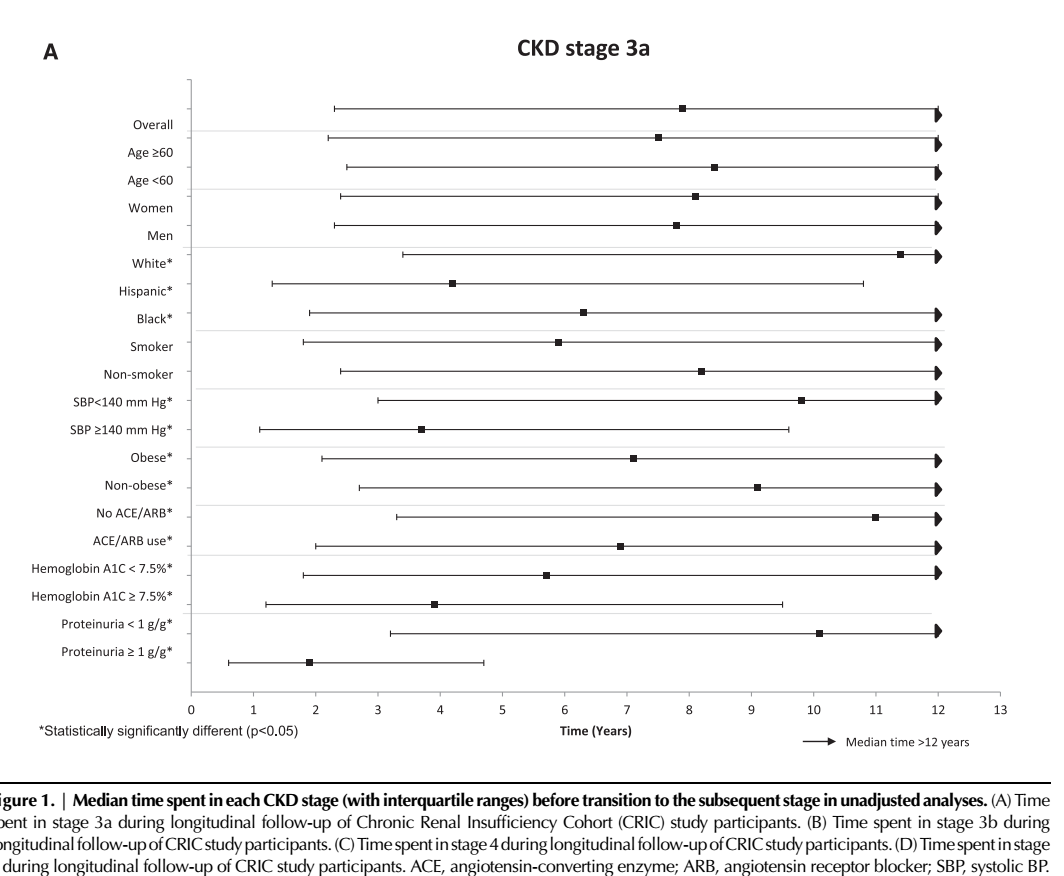
So if we see the factors that can cause a rapid rise in creatinine or progression of kidney disease from stage 3a to 3b, they are race, Smoking, High BP(140 or above), Obesity, poor blood sugar control(HBA1C 7.5 OR above), and Urinary protein leak of 1 gram or above in a day. Of these Urine protein leak and High BP are the factors that cause progression in just 2-3 years and hence are the most important predictors of progression.
Interventions like early quitting of smoking can postpone progression by 3 years, losing weight can postpone it by 2 years, Targeting BP to 130/80 can postpone by 6-7 years, and reducing protein leak can postpone by 8 years.
At the early stage of kidney disease the control of these factors gives the maximum benefit and hence each of these risk factors should be attended with great attention and care and the targets should be precisely met to retard the progression. This requires a multidisciplinary team approach consisting of the Primary physician, the nephrologist, and the dietician right from the early stages of kidney disease.
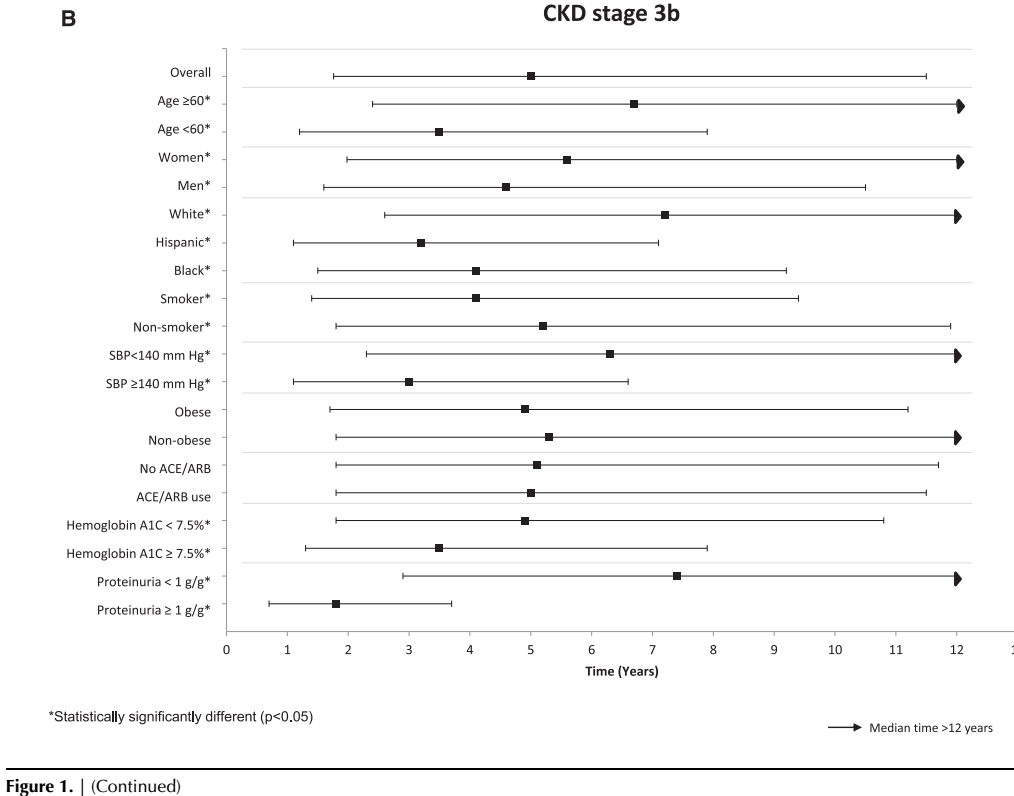
There are some non-modifiable risk factors like the race, which suggests that certain genetic factors also contribute to the speed of progression of the disease, hence despite all the best efforts some may continue to progress more rapidly than others.
But at any given stage achieving target blood pressure (<130/80) and Urinary protein reduction to as little as possible (preferably below 500mg) has the biggest impact on the progression of the Kidney disease.
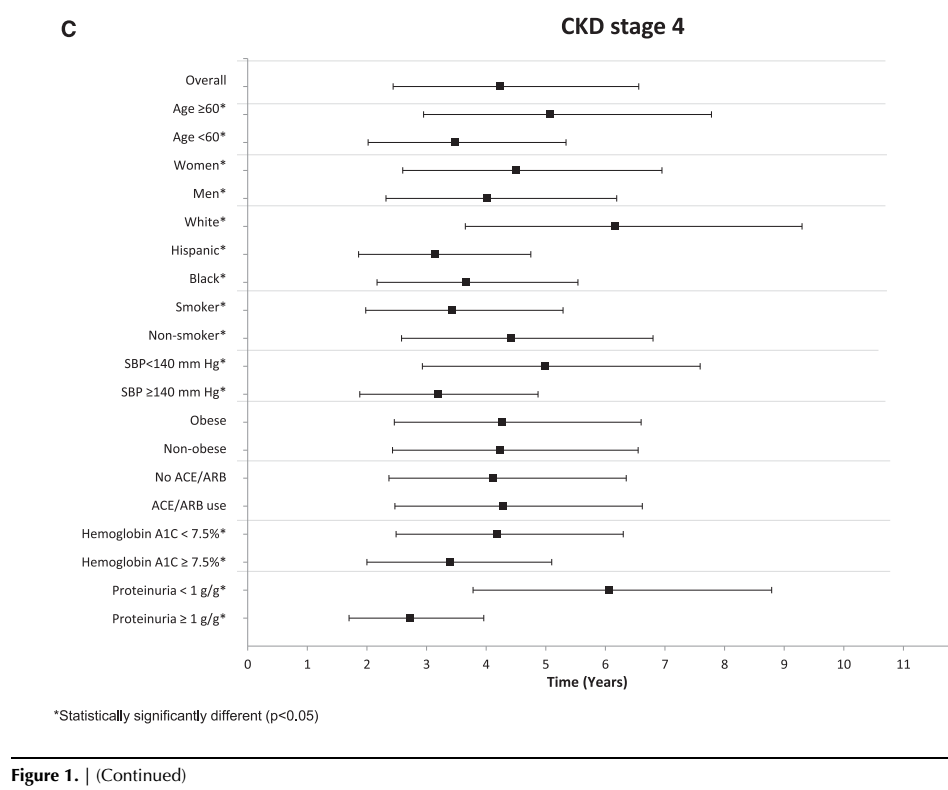
CKD stage3b onwards the risk of infections is high and hence it’s essential to vaccinate them for all preventable infections like Pneumococcal pneumonia, influenza, Hepatitis B, etc.
It is also advisable to start preparing for vascular access for future dialysis requirement, in the form of avoiding pricking of veins in the non-dominant hand, so that the quality of veins is good for a successful AV fistula creation in the future. Also, those who have smaller veins can start doing handgrip exercises to improve the quality of veins in the hand.
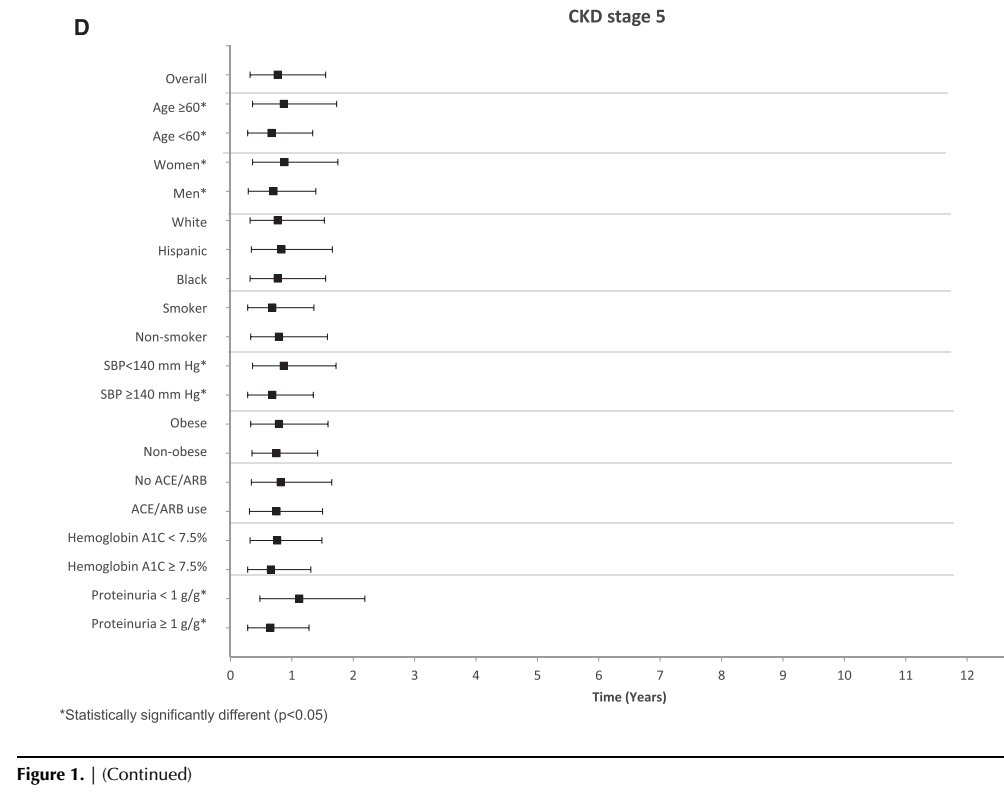
Once an individual reaches Stage 5 CKD, the progression to dialysis dependence is much faster and could be anywhere between 6 months to 1 year on average. There are exceptional cases where they may remain dialysis independent for many years despite being in stage 5. Hence, it is essential at this stage to start discussing the choice of the modality of dialysis, preparation of Vascular access & Completing the vaccinations as per schedule if they have not been done yet.
Article by
Best nephrologist in Hyderabad